My approach to AI
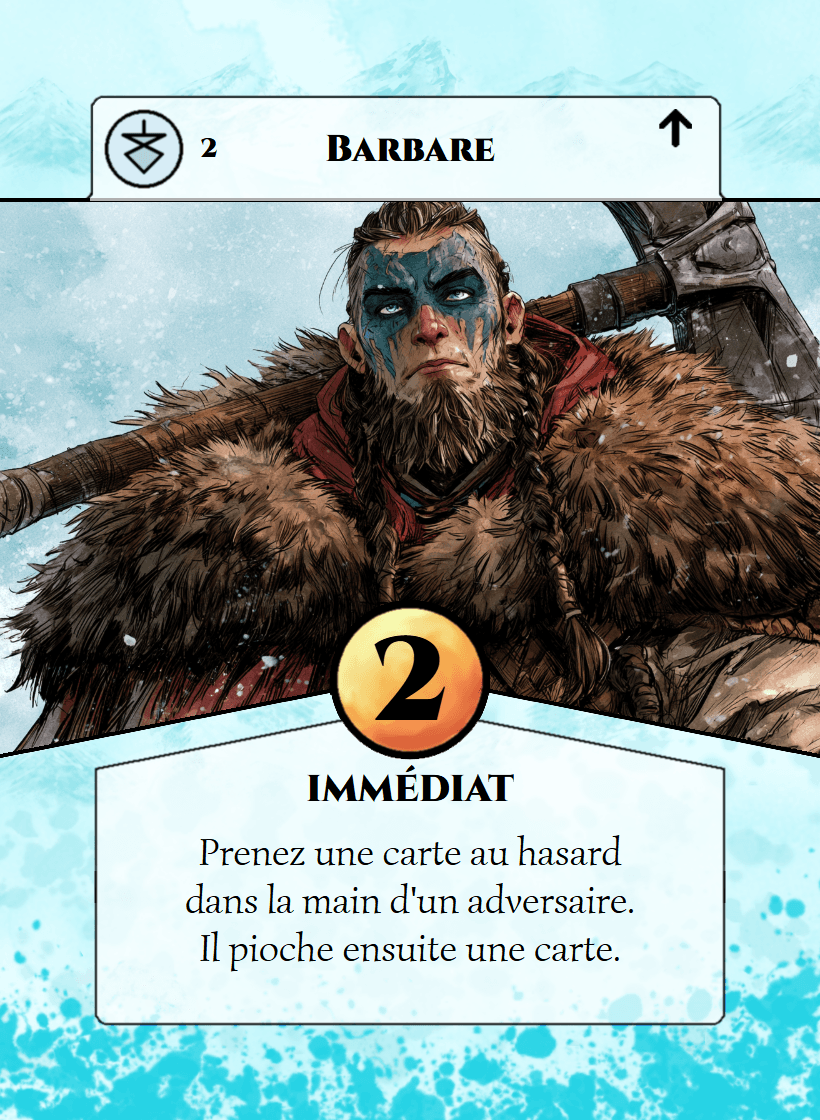
I use artificial intelligence as a prototyping tool, and I am committed to doing so with full transparency. The current card illustrations are AI-generated — and only the illustrations: the card borders, sprites and other small, simple elements are made by me, with Aseprite and Krita. Under no circumstances do I use AI for game design or balancing.
I am entirely opposed to the use of AI in a commercial product: partly because it destroys artists' jobs, and partly because AI-generated illustrations are poor — they lack consistency with one another and miss the depth, the artistic touch that only a professional can bring. If I fell in love with Everdell, it was largely thanks to the beauty of Andrew Bosley's illustrations — something no AI could ever reproduce.
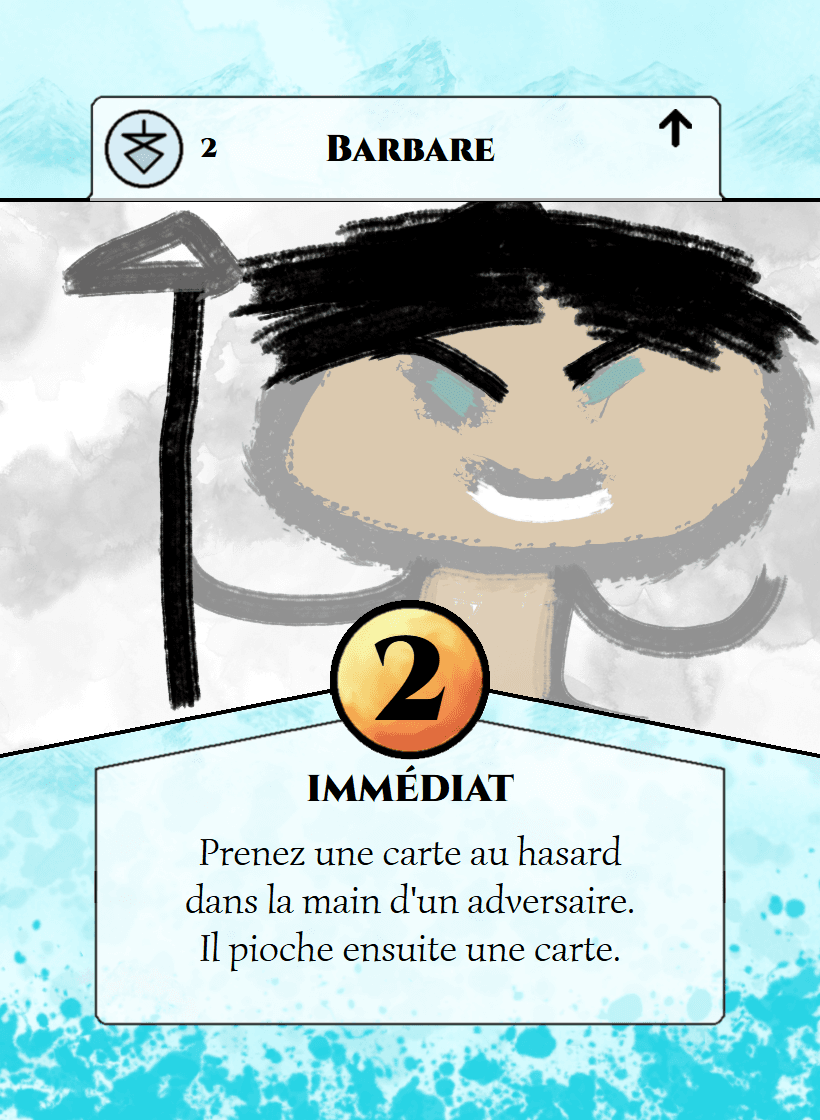
It is, however, a good prototyping tool. People greatly underestimate a game's wow factor and how much players care about aesthetics. Even with AI illustrations, 90% of the feedback I have received from non-professional players concerns the visuals rather than the gameplay. Not being an illustrator, I cannot produce beautiful images (see the example below). Paying an illustrator fairly without the slightest commercial prospect is a risk only a few people can afford. As for taking illustrations from the internet, I fail to see how that would be any better than using AI.
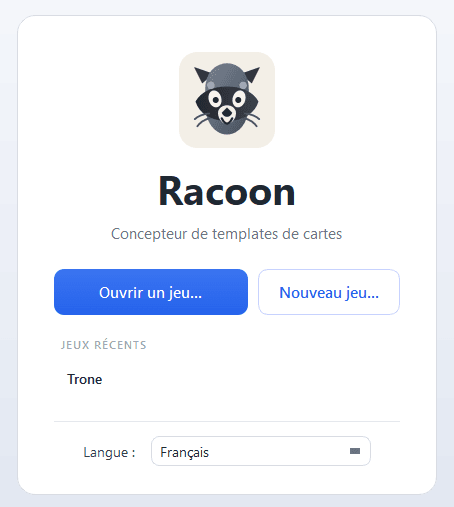
Racoon, the workshop behind the cards
I started producing cards with an old version of Sketchbook. I wasted an enormous amount of time: loading sprites, positioning them correctly, placing the text, inserting icons into sentences by hitting the space bar fifteen times… for every single card. Worst of all was redoing everything whenever I wanted to change an image, a keyword or fix a typo. I quickly looked for another solution. I considered the Adobe suite and Figma: those tools would certainly meet my needs, but they require a paid licence and, above all, hours of learning to master.
As a developer, I therefore decided to build my own tool in Python and Qt, named Racoon as a tribute to the Python libraries I use most in my day job: Pandas and Polars. The project started small — an HTML template into which I embed images and text, harnessing the power of HTML to lay out cards without constraints. I then built a tool to automate card generation from text files, and finally consolidated it all into a graphical application to view and manipulate my cards in a few clicks. Today I can insert icons inside text, underline, have the font size adapt automatically to the text length, alternate bold and regular within the same sentence — with no complex manipulation, and for all my cards at once. If the illustrations need to change, a few clicks regenerate a printable set, formatted for professional printing or for my personal use (bleeds and margins).
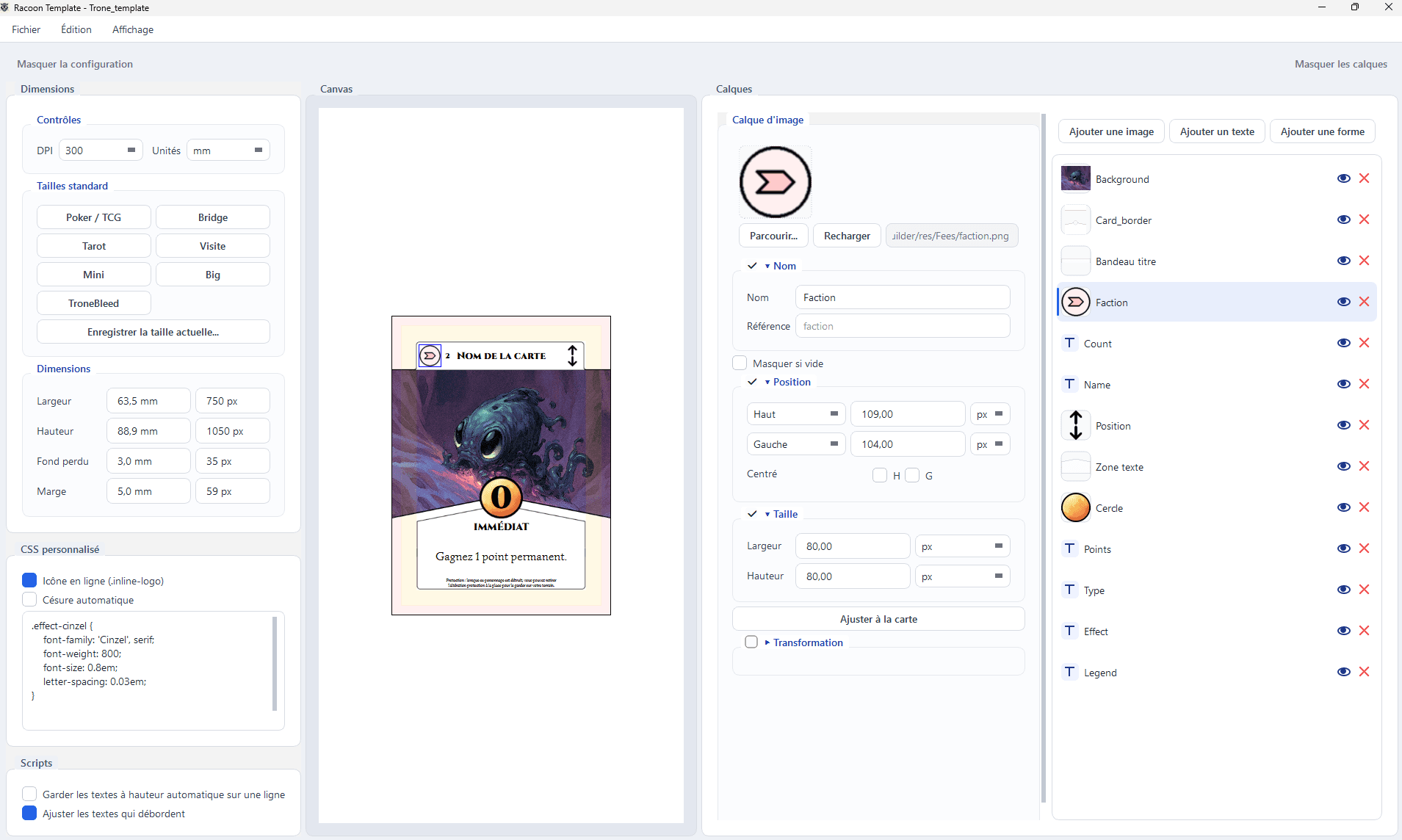
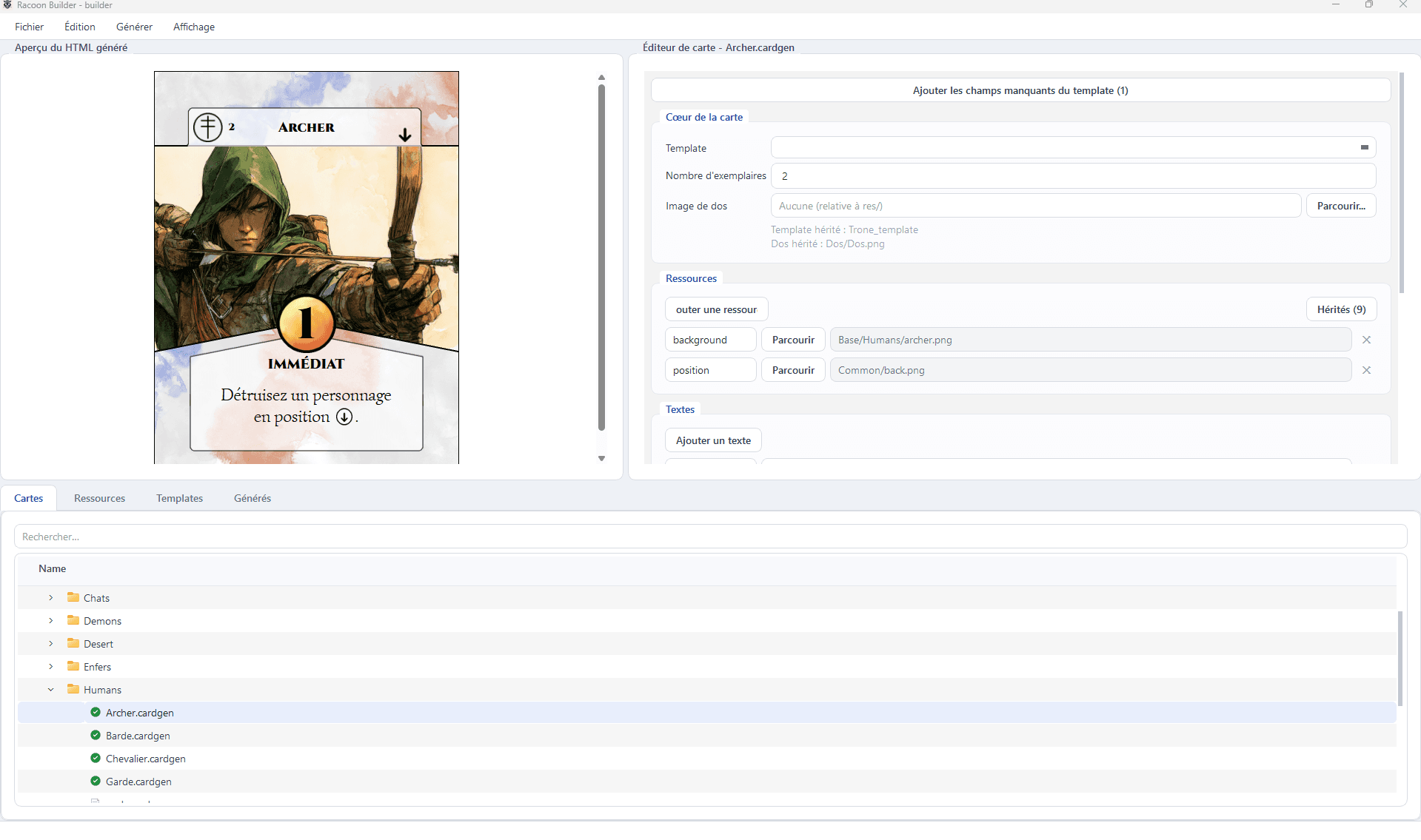
Racoon certainly does nothing that the big creative tools cannot already do. But it does exactly what I actually need to keep my games evolving — for free.